







Shipping and couriers
Goodbye failed deliveries: how to cut eCommerce costs with Out Of Home (lockers and pickup points)
Reduce failed deliveries with lockers and PUDO: better punctuality, lower costs and fewer support tickets. Best practices by Qapla'.
Pickup pointsCosts and invoices
Every day, in the eCommerce world, the same scene repeats itself: the courier rings a buzzer and no one answers. The address is wrong, the customer is out, or they simply didn’t hear the bell. This small, ordinary hiccup turns into a huge cost for your company. We’re talking failed deliveries, parcels on hold, re-deliveries and, above all, a flood of requests to customer service that slow the whole team down.
This situation has a specific name in the industry: WISMO, acronym for “Where Is My Order?” WISMO tickets are the most insidious cost line for customer service. According to Gorgias, 30% of all tickets are tied to tracking and delivery issues. Imagine a team of five people spending an entire afternoon answering these questions instead of solving more complex problems or building customer loyalty. It’s wasted time, burned resources and, ultimately, lost revenue.
But there is a way to tackle this problem at the root-reducing failed deliveries and operational costs while freeing up your customer service team. The solution is called Out Of Home (OOH).
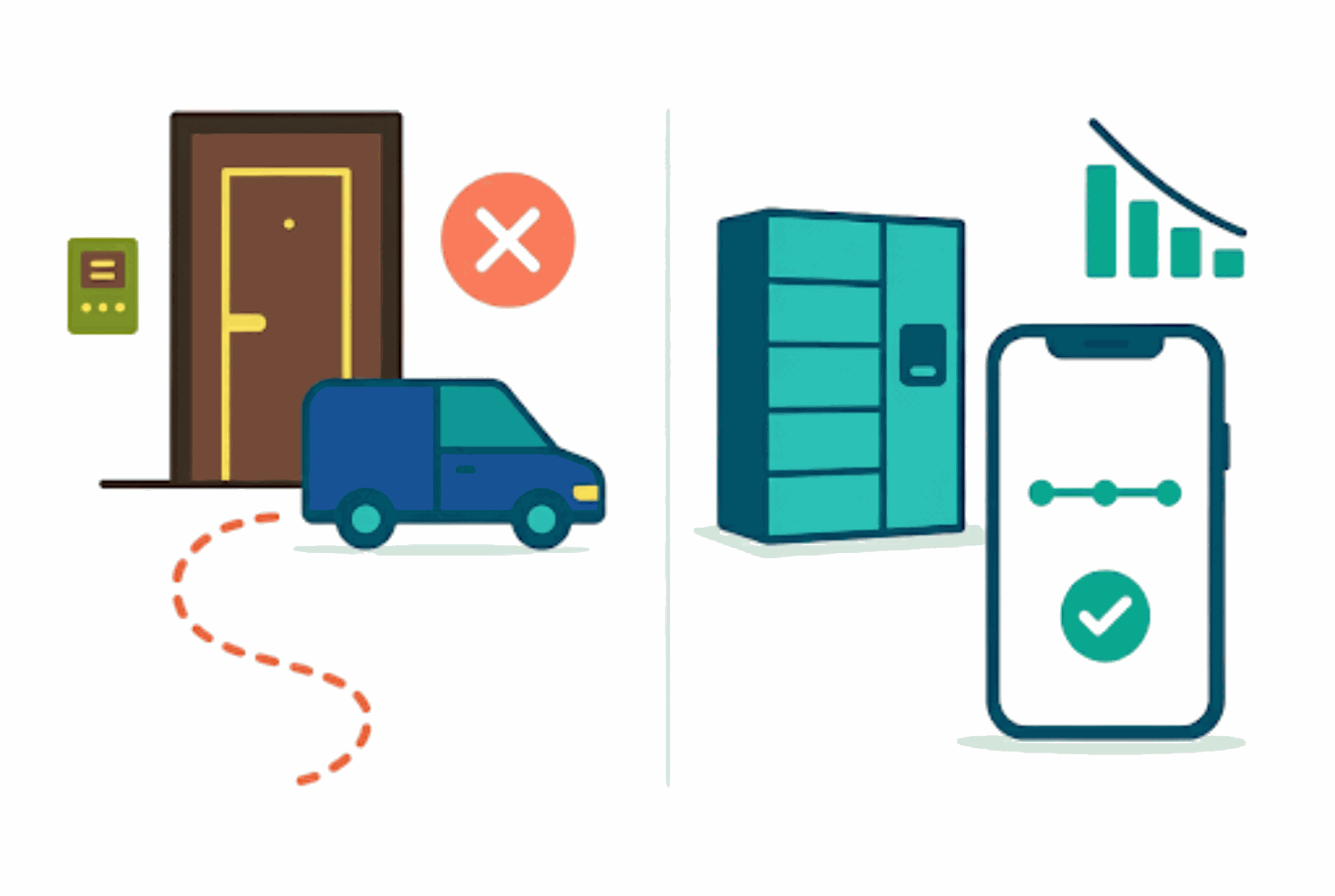
What is Out Of Home (lockers/PUDO) and why it works
Out Of Home (OOH) refers to an alternative delivery method to traditional home delivery. In practice, the parcel doesn’t go directly to the customer’s home; it’s delivered to a pickup point (PUDO)-such as a newsstand, stationery shop or partner store-or to a locker, an automated parcel box accessible 24/7. Here are 6 concrete reasons why OOH drastically reduces failed deliveries and your workload:- Extended pickup hours: unlike home delivery, which happens during working hours, PUDOs and lockers offer much wider time windows. Many pickup points are open on Saturdays and Sundays or until late, while lockers are available 24/7. This eliminates the “customer not at home” problem and lets busy customers collect parcels at their convenience.
- Certain delivery address: no mistakes with street numbers or addresses the courier can’t find. The delivery address is a physical point already known to the system, with exact coordinates, minimizing routing errors.
- Timely notifications and traceability: once the parcel arrives at the PUDO or locker, the customer receives a clear, immediate notification-often with a QR code or PIN to collect. The chain of events is transparent: the customer knows exactly where their parcel is and when they can pick it up.
- Lower operational costs: every failed delivery incurs a cost for the courier and for you (re-delivery, holding/storage). OOH drastically reduces these events, also lowering shipping costs for your eCommerce.
- Sustainability: delivering to a pickup point consolidates multiple parcels into a single courier stop. That means fewer vehicles on the road, lower CO₂ emissions and a smaller environmental footprint for your logistics.
- Work addresses: if your customer has a business or office, they often can’t receive the parcel at home. A pickup point near the office is ideal.
- Remote ZIP/postal codes or hard-to-reach areas: where express service doesn’t cover well or logistics are complex, OOH ensures a more reliable and faster delivery.
- Seasonal peaks: during Black Friday, Christmas or sales, couriers are under pressure. Choosing OOH helps ensure on-time deliveries and reduces operational stress.
- Returns handling: OOH is also perfect for reverse logistics. The customer can drop off the return at the most convenient pickup point without waiting for a courier at home.
- Clear placement: the OOH option should be prominent and easy to select during the shipping choice step, alongside or as an alternative to home delivery. Avoid hiding it in complex submenus.
- Clear, persuasive microcopy: use short, direct texts that highlight OOH benefits. Examples: “Pick up whenever, wherever,” “More flexible and sustainable delivery,” “No waiting at home.”
- Interactive map: integrate a map that lets customers view available lockers and PUDOs based on their address or postal code. Visual selection of the most convenient point increases adoption.
- Price incentive: if possible, offer a slightly lower shipping cost for OOH than for home delivery. Even a small saving can strongly encourage customers to choose it.
- Save preferences: allow registered customers to save their preferred pickup point for future purchases, making the process even faster and more convenient.
- Activate the PUDO network: first, choose and integrate a network of pickup points and lockers. Services like Qapla’ Pudo and GEL Proximity offer direct integrations with major couriers, giving you access to thousands of points across Italy via a single API.
- Map in the checkout: integrate the selection map in your cart. When the customer selects OOH, they see a geolocated map to find the most convenient pickup point.
- Saving PUDO specifications: Once the customer has selected a location, the system must save the relevant specifications (e.g., locker code, store address) as additional order data.
- Printing labels with PUDO: The management software must be able to print a shipping label that includes the pickup location address as the destination. With software like Qapla’, the label is automatically generated based on the specifications saved in the order.
- Arrival/holding notifications: customers receive automatic updates as soon as the parcel is available at the pickup point, with a clear pickup window and holding deadline.
- OOH Adoption Rate: the percentage of customers choosing Out Of Home delivery. A good value indicates the option is visible and appreciated.
- First Attempt Delivery Rate: the percentage of deliveries completed successfully on the first attempt. With OOH, this should increase dramatically.
- WISMO tickets per 100 orders: how many customer service tickets you receive for every 100 shipped orders. The goal is to reduce this number.
- Cost per contact: your average cost for each customer service contact. Fewer tickets = lower costs.
- Average holding time: how long the parcel remains at a pickup point. If it’s too high, it may indicate a communication issue.
When to offer OOH at checkout
Offering Out Of Home delivery doesn’t mean removing home delivery; it means adding it as a strategic option, especially in these situations:UX tip: how to present the Out Of Home option
Checkout UX is crucial. Here’s how to integrate OOH effectively:Operational implementation in 5 steps
Activating Out Of Home delivery isn’t complicated, especially if you use the right tools.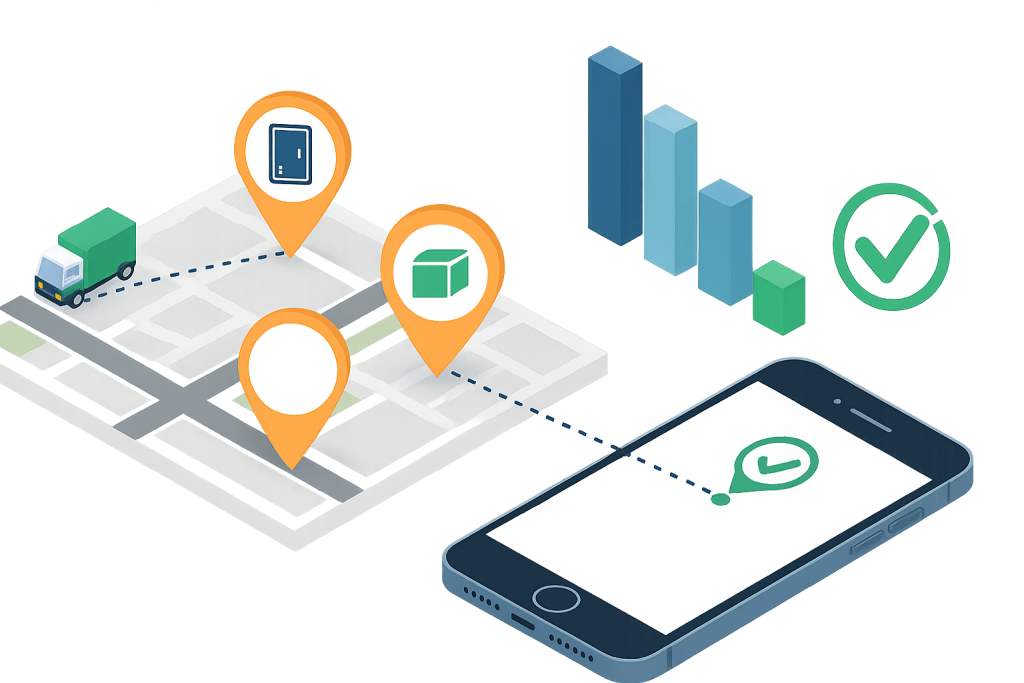
Qapla’ Corner: concrete value for merchants and ops teams
Integrating OOH is only part of the solution. To truly eliminate WISMO tickets, you need to give customers full tracking control and communicate proactively. That’s where Qapla’ comes in.Label generation in 3 clicks with PUDO included
Qapla’ integrates with popular PUDO networks like GEL Proximity. When a customer chooses OOH at your checkout, the data is automatically imported into Qapla’s back office. No more manually entering addresses or codes: in just a few clicks you generate the label with the pickup point as the final destination. This not only reduces human error but speeds up picking and packing.Branded tracking + proactive communication: the anti-WISMO formula
Qapla’s big innovation is branded tracking. Instead of sending customers to the courier’s site (where they may get lost or misunderstand the status), Qapla’ redirects them to your own branded tracking page. This page-featuring your logo and colors-becomes the customer’s control center. But it doesn’t stop there: Qapla’ sends personalized emails, SMS or WhatsApp messages at each status change: “Your parcel is out for delivery,” “Your parcel has arrived at the pickup point [PUDO NAME],” “Holding expires in 2 days.” This proactive, ongoing communication reduces WISMO tickets by up to 50%. Customers always know where their order is, without contacting customer service.Quick plugins for Shopify / Prestashop / WooCommerce / Magento
To make integration even easier, Qapla’ provides plugins and connectors for major eCommerce platforms like Shopify, Prestashop, WooCommerce and Magento. That means you can activate Qapla’ and start managing your OOH shipments very quickly, without complex integrations or custom development. Ease of use and fast setup make Qapla’ the ideal solution for eCommerce of all sizes that want to optimize logistics and improve the customer experience.KPIs to monitor
To measure the effectiveness of introducing OOH, keep an eye on the right indicators.Essential KPIs
FAQ: quick answers
Is OOH always cheaper?
Yes. Usually the cost of an OOH delivery for the courier is lower than home delivery. That lets you offer a more attractive shipping rate to customers.
What happens if the customer doesn’t pick up the parcel?
If they don’t collect it by the deadline, the parcel is returned to sender. With Qapla’, you can set automatic reminders days before the deadline, drastically reducing these cases.
Does it work with cash on delivery?
Yes. Many PUDO networks support payment on pickup. The customer pays in cash or by card to the pickup point operator.
Can I use it for returns?
Absolutely. OOH is perfect for returns (reverse logistics). The customer doesn’t need to wait for a courier at home and can drop off the parcel whenever it suits them.
© Qapla’ Blog, All rights reserved.